
Piece to Camera, Stand-Up and Sign-Off: Reporting Terms Explained
A plain-words guide to three phrases heard on every news shoot: the piece to camera, the stand-up and the sign-off, and what each asks of a reporter in front of the lens.
Daniel Okoye · · 5 minutes to read
Why the vocabulary matters
New reporters often arrive on a shoot knowing how to write but not how the crew talks. A camera operator says 'give me a stand-up' and the reporter nods without being sure what is wanted, where to stand or how long to speak. I teach camera work at currenlu, and I see this on almost every practice day in Oxford.
Knowing the terms is not about sounding professional. It saves minutes in the field, and minutes matter when light is changing, a crowd is moving on or a live slot is approaching. A shared language lets the person behind the camera and the person in front of it prepare the same shot.
On-Camera Reporting is the course where we practise these words until they are second nature. This article covers three of them, in plain terms, and says what each asks of you.
The piece to camera
A piece to camera, often shortened to PTC, is the moment the reporter speaks directly into the lens. It is a few sentences, usually delivered on location, that explain something the pictures cannot show on their own: what a decision means, what has changed since the last update, or what happens next.
The rule of thumb in our sessions is that a piece to camera earns its place only when the reporter adds something. If the script simply describes what the viewer can already see, cut it. If it connects two facts, or gives context that no shot could carry, keep it.
It is usually short, and it is usually written before you press record. Priya Nair, our reporting coach, asks students to say the lines aloud twice before the first take, so the words sound spoken rather than read.
- Speak to one person, not to an audience
- Keep it to the points the pictures cannot make
- Write it to be heard, with short sentences
The stand-up and where you stand
Stand-up is the term many crews use for a piece to camera delivered on your feet at the scene. The word sounds casual, but the choices behind it are deliberate. Where the reporter stands tells the viewer something: in front of the building under discussion, beside the road that is closed, on the spot where the event took place.
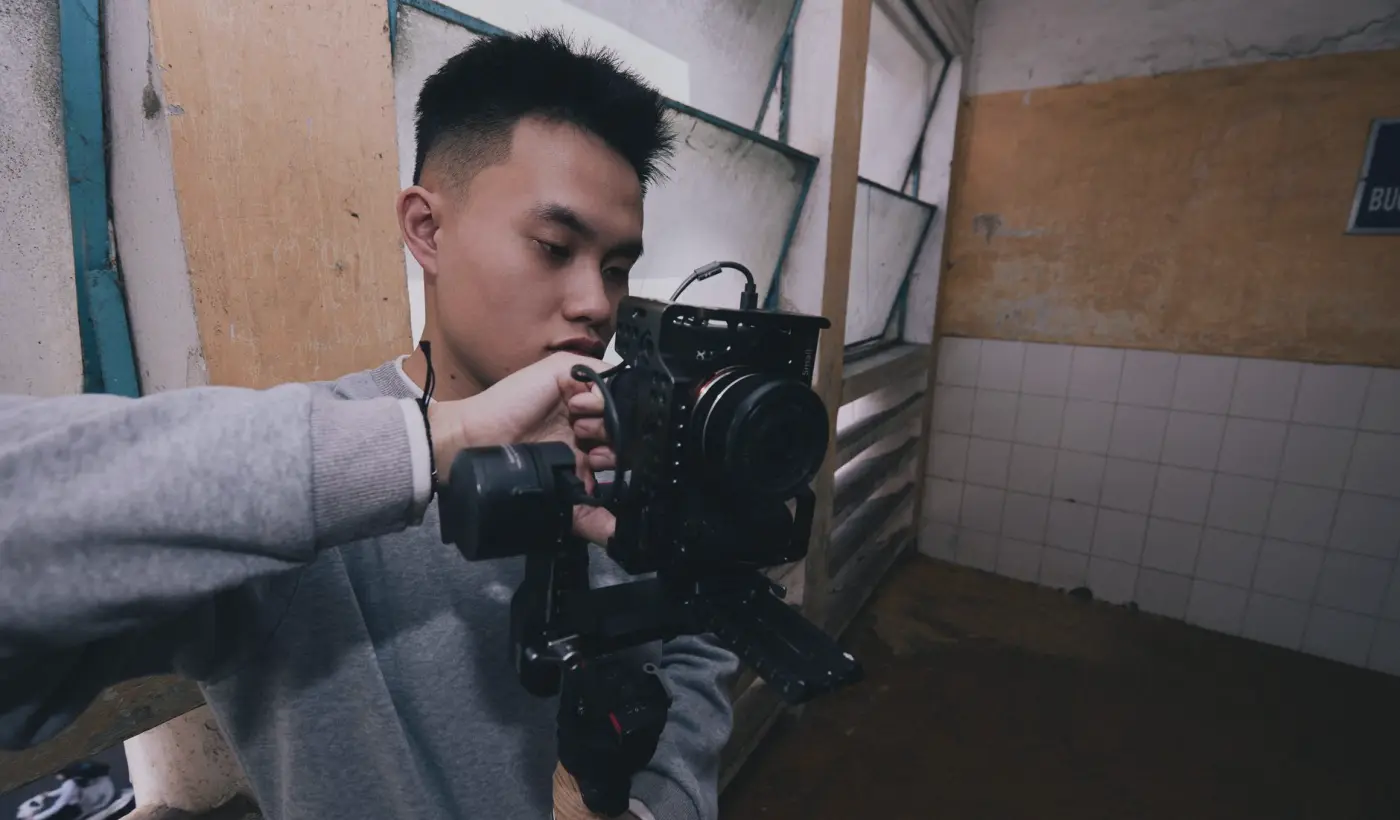
From the camera side, I look at three things before we roll: what is behind the reporter, where the light is coming from, and whether the sound will hold up. A striking background is no use if wind makes the words unusable, or if a passing bus pulls the viewer's eye away from the face.
As a reporter, ask the operator how you are framed before you begin. A quick check of head room and background costs ten seconds and saves a retake.
- Check what is behind you before speaking
- Face the light where you can, not away from it
- Listen for traffic, wind and other voices
Walking, moving and keeping the shot steady
Some stand-ups include movement: the reporter walks towards the camera, turns to point at something, or moves through a doorway while speaking. This can bring energy and a sense of place, but it asks more of both people on the shoot.
The operator has to track the movement without the frame lurching. The reporter has to know the route, the stopping point and the words well enough not to look at the ground. We rehearse these moves in the car park behind our building before anyone tries one on a real story.
A good rule is to move only when the movement means something. Walking to a gate because the story is about that gate makes sense. Walking simply to look busy does not, and viewers can tell the difference.
The sign-off
The sign-off is the closing line of a report, usually spoken to camera, which names the reporter and the location so the studio and the viewer know where the story came from. It is brief, steady and delivered without hurry, since it is the last thing the audience hears from you.
Each programme has its own habits about the exact wording, so a trainee should ask rather than guess. What stays constant is the tone: clear, calm and finished. A sign-off that trails away or rises at the end as if asking a question leaves the report feeling unresolved.
In our recorded feedback sessions, students watch their sign-offs back more often than any other part of a report. It is short enough to repeat many times, and small changes in pace or breath make an audible difference.
- Name, location, then stop
- Drop your voice slightly on the last word
- Hold still for a second after the final word
Putting the terms to work
Learning these words is the easy part. Using them under pressure is where practice counts. On a course day, a student might write a piece to camera, choose a location for a stand-up, brief the operator on the framing, and finish with a sign-off, all within a single supervised exercise.
Afterwards we watch the recording together, with the reporter and the camera operator in the room. Often the reporter spots a problem the operator had already noticed, and the other way round. That shared viewing is where the vocabulary stops being a list and becomes a working habit.
If you are early in your career, start by listening to how experienced crews use these terms, then use them yourself in small, low-stakes practice shoots. Confidence comes from repetition, not from memorising definitions.
A piece to camera, a stand-up and a sign-off are simple ideas with precise jobs. The first adds meaning, the second places you in the story, and the third closes it cleanly. Learn what each asks of you, say the words aloud before recording, and talk to your camera operator before every take. These habits cost nothing, and they are the foundation of the on-camera work we practise in Oxford.